
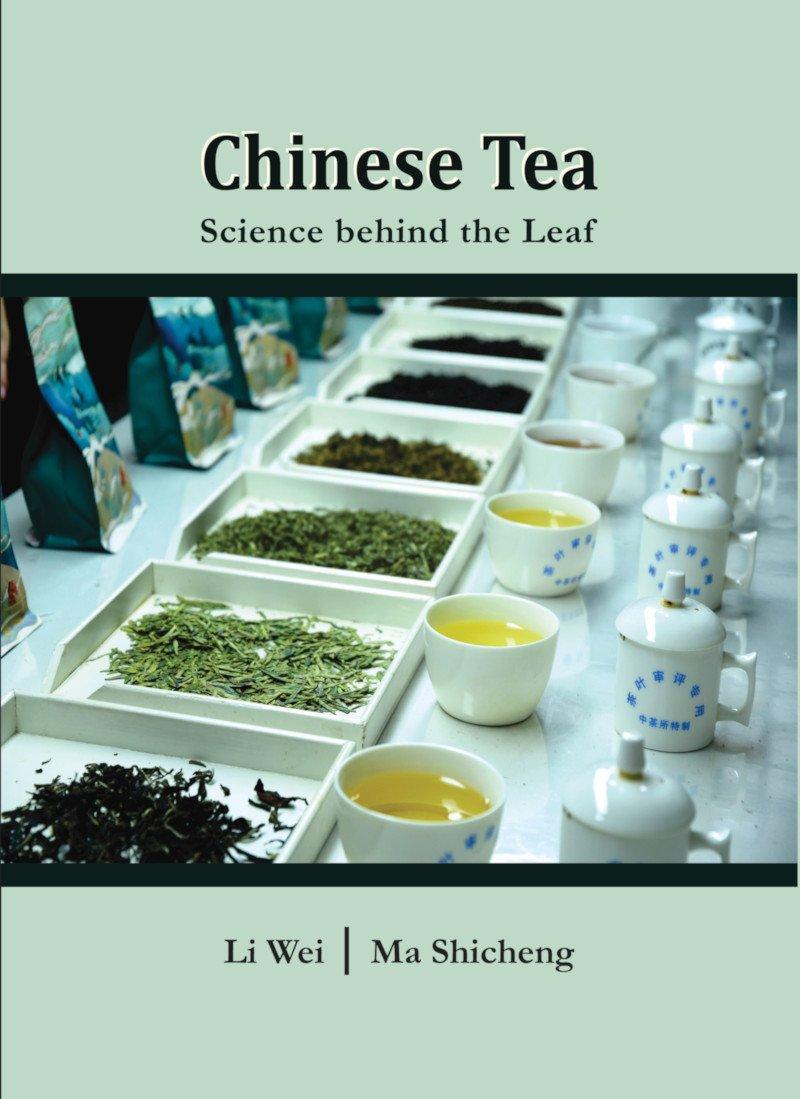
Chinese Tea: Science Behind the Leaf
Tea is a gift from China to the world. With a history of over 6,000 years in cultivating
and using tea, through their wisdom and diligence, our Chinese ancestors created myriad
flavors and aromas from this evergreen plant.
This tea book is intended by its author Li Wei and co-author Ma Shicheng as a
compendium of what they have learned over twenty years as tea researchers. It aims to
cover every aspect of the natural science of tea, and does so by following a logical
structure. First, it answers questions that nearly every tea drinker may ask, such as "How
does tea quality fit one’s personal preferences?" or "How is a cup of tea evaluated?"
This section suffices for the regular tea drinker. For those with a deeper adoration of
tea that wish to delve into the stories behind each cuppa’, the book further explains how
environmental and varietal factors influence tea quality, the development of tea trees,
the logic and methods behind naming teas, and the cultivation and farming of the tea
plant. Then, the authors explore how tea craftsmen transform ordinary green leaves
into varieties of teas, forming the core content of the book. Next, the methods of
storing and brewing tea are discussed. The second part of the book introduces China's
four major tea regions, each characterized by unique landscapes, climates and local
customs, ultimately influencing the types of teas produced and their usage. Tea is
consumed for its health benefits concerning both body and mind. Accordingly, the third
part of the book discusses how bioactive components in tea affect the prevention and
treatment of acute and chronic diseases in humans.
There is much more to tea than just fermented/unfermented leaves – from
where and how tea trees are grown, to the techniques used to turn them into tea, and to
how brewed tea can be enjoyed in the cup. Using Liubao tea as an example, this book
illustrates the efforts behind producing a standardized cup of tea. Local government
experts and researchers have developed and implemented a series of standards,
including national and local standards for Liubao tea, those on fresh leaf picking
techniques, production technology, geographical indication products, sensory evaluation,
packaging and transportation specifications, brewing and tasting methods, competition,
warehousing regulations, and export processing specifications.
"Chinese Tea: Science Behind the Leaf" is a book written for all tea lovers.
Welcome to the world of tea and, above all, have fun.

Li Wei
AuthorDr. Wei Li earned his Ph.D. and Master's degrees in Tea Science from Zhejiang
University, Hangzhou, China, in 2011 and 2006, respectively, following his
Bachelor's degree in Horticulture from Henan Agriculture University in 2003.
From November 2006 to January 2024, Dr. Li served as a faculty member,
teaching Tea Science at a university in Hangzhou. His research centers on tea
biochemistry and quality, covering areas such as tea chemistry, health benefits,
plantation, manufacturing, and taste.
Dr. Li holds certifications as a Senior Tea Craftsman (2011) and Senior
Tea Sensory Taster (2006). Since 2005, he has published 11 peer-reviewed papers
in international journals and conferences and has served as a reviewer for several
academic journals. He was part of a team that received the Second Class Prize of
the Scientific and Technological Award of Zhejiang Province in 2012, as well as
the Silver Prize at the International Exhibition of Inventions of Geneva that
same year. Since co-founding the Chinese Tea Alliance in January 2024, Dr. Li
has been committed to promoting the rich heritage and culture of Chinese tea
worldwide.
Ma Shicheng
AuthorDr. Shicheng Ma earned his Ph.D. and Master’s degrees in Tea Science from
Zhejiang University, Hangzhou, China, in 2012 and 2007, respectively. He also
holds dual Bachelor's degrees in Horticulture and Biotechnology from Shandong
Agricultural University, which he completed in 2005. Since 2012, Dr. Ma has
served as the Director of Wuzhou Liubao Tea Research Association and
Wuzhou Tea Industry Development Service Center, in Wuzhou city, Guangxi
Province, China.
Dr. Ma’s research focuses on the functional components of tea and its
industrialization. His recent research interests include developing national tea
standards, advancing the industrialization of Liubao Tea, and studying the
characteristic chemical compounds of dark tea, yellow tea, and white tea. Since
2007, Dr. Ma has published 20 peer-reviewed research papers, authored four
books, and obtained eight patents. He was also recognized as a National
Agricultural Model in 2017 and named Person of the Year in the Chinese Tea
Industry in 2018.
Highlights
More like this
Follow us